Who Started Notting Hill Carnival? The Truth About Its Origins
Discover who started Notting Hill Carnival and its true origins. Learn about Europe's biggest street festival on our Notting Hill Caribbean heritage walks in London.
11/21/20257 min read
Who Started Notting Hill Carnival? The Truth About Its Origins
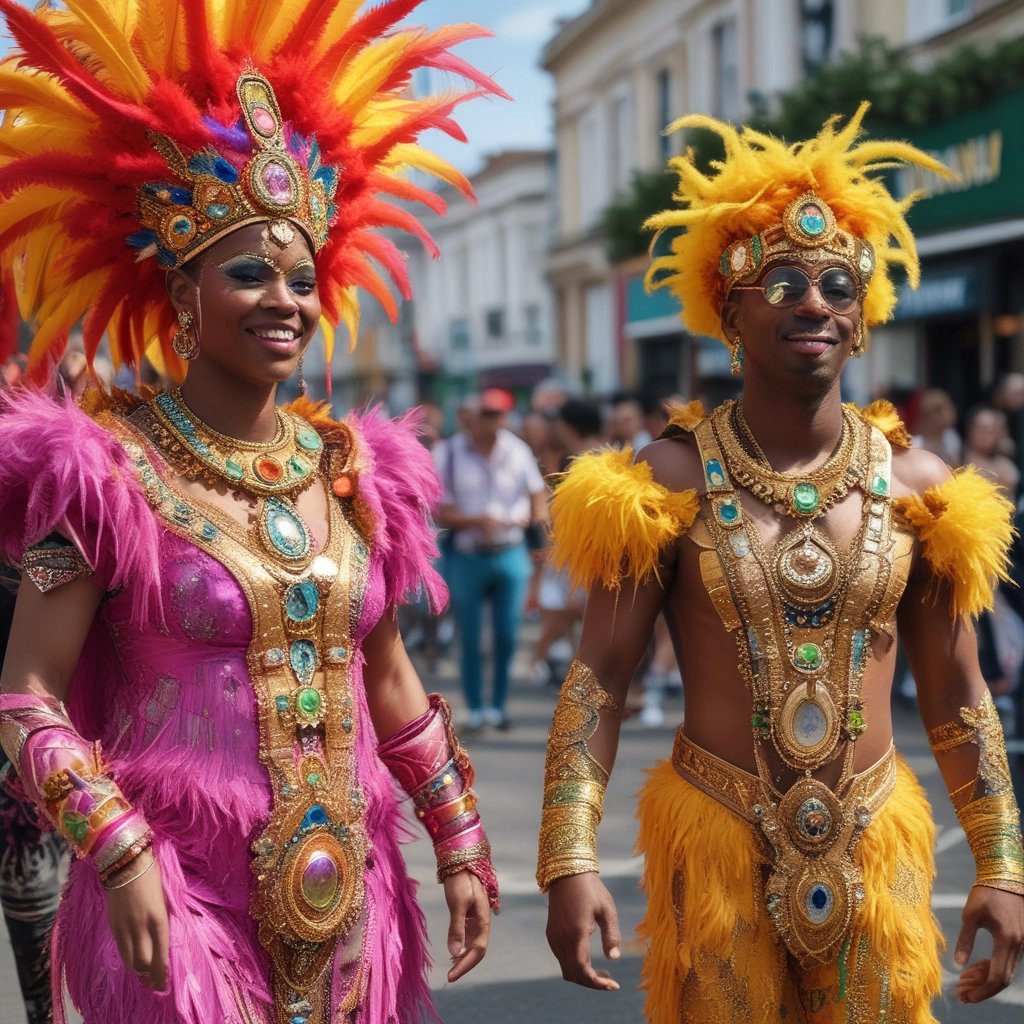
When August arrives and the streets of West London pulse with steel pan rhythms and vibrant masquerade costumes, you'll hear one name repeated again and again: Claudia Jones, the so-called "Founder of Notting Hill Carnival." It's become accepted wisdom, repeated in tourist guides, educational materials and social media posts. There's just one problem—it isn't true.
This isn't an attack on Claudia's legacy. Far from it. It's about giving her the credit she actually deserves whilst also honouring the people who genuinely created the street festival millions now enjoy each year.
The Facts About What Claudia Jones Created
Claudia Jones organised indoor Caribbean carnivals at various London venues from 1959 through to 1964. The first took place on 30 January 1959 at St Pancras Town Hall—sit-down variety shows with calypso music, traditional dancing and Caribbean cuisine, all under one roof.
These events mattered enormously, providing cultural refuge during a period of vicious racial hostility. But they weren't street carnivals, they didn't happen in Notting Hill, and they stopped when Claudia died on Christmas Day 1964.
Notting Hill Carnival started sometime in the mid-1960s—historians debate whether 1965 or 1966—which means it began after Claudia had already passed away. She never planned a street carnival, never organised anything in Notting Hill itself, and the format of her events bore little resemblance to what Notting Hill Carnival would become.
Who Was Claudia Jones?
She wasn't born Claudia Jones—her birth name was Claude Vera Cumberbatch, born in Port of Spain, Trinidad on 21 February 1915. Her parents emigrated to New York without her, and young Claude joined them two years later in 1924, travelling with her sisters and an aunt when she was nearly nine years old.
America shaped her into a formidable activist. She joined the Communist Party whilst campaigning to defend the Scottsboro Boys—young Black men falsely accused of rape in the American South. Her political work eventually landed her on Ellis Island twice during the McCarthy witch-hunts.
When the American government deported her in 1955, Trinidad refused to accept her return. Britain took her in on humanitarian grounds. She arrived carrying decades of organising experience and a sophisticated grasp of how culture could challenge racism.
Although strongly associated with Notting Hill, she never actually lived there. She did walk those streets regularly, visiting her friend and comrade Amy Ashwood Garvey who lived at 1 Bassett Street in nearby Ladbroke Grove—locations you can explore on heritage walks through Notting Hill today.
Working alongside Pearl Prescod, Claudia helped lead the Committee of Afro-Asian and Caribbean Organisations (CAACO), which organised London's solidarity demonstration supporting the March on Washington for Jobs and Freedom. The march set off from Ladbroke Grove on 31 August 1963, just three days after the historic Washington march, representing part of a worldwide movement of Black and Asian communities standing together against discrimination.
Why These Were Completely Different Events
The West Indian Gazette's events happened indoors in hired halls across London—first St Pancras Town Hall, then Seymour Hall, the Lyceum and other venues. People sat to watch performances on stage. It was controlled, contained, theatrical. Importantly, these weren't even London's first Caribbean carnival celebrations, and they had nothing whatsoever to do with Kelso Cochrane, the Antiguan carpenter murdered in Notting Hill several months after that first indoor event.
Notting Hill Carnival emerged from different roots entirely. Rhaune Laslett, a community activist with Native American heritage who actually lived in Notting Hill, started organising what would become the carnival. She imagined a multicultural street celebration bringing together the neighbourhood's diverse residents—people from Ukraine, Spain, Portugal, Ireland, the Caribbean and Africa all living side by side in what was then a working-class area.
Here's a crucial detail: Notting Hill Carnival didn't begin as a specifically Caribbean event. Musician Russ Henderson introduced that element. He'd performed at Claudia's indoor carnivals, and when he took his steel band out into Laslett's street festival, marching through the roads with people following the music, the Caribbean character started taking shape.
Historical records disagree about whether this first happened in 1965 or 1966. What's certain is that roughly 1,000 people attended those initial celebrations. By the early 1970s, when Laslett handed over organisational responsibility, the event had expanded considerably.
There simply isn't a connection between these two carnivals beyond the fact that they both celebrated Caribbean culture in London.
Leslie Palmer: The Architect Who Built Modern Carnival
Leslie Palmer transformed Laslett's creation into the phenomenon we recognise today. Born in Tunapuna, Trinidad in 1943, Leslie arrived in England in 1964 aged just 21. He trained as a teacher in Liverpool—earning the lifelong nickname "Teacher"—and also performed calypso under the stage name "The Wounded Soldier."
When Leslie became carnival director in 1973, the event remained relatively small. Within two years, he'd built Europe's largest street festival, exploding attendance from roughly 3,000 participants to 50,000. His innovations reshaped everything: merging steelbands, reggae and sound systems into one celebration; bringing proper masquerade bands with elaborate traditional costumes onto London streets; introducing electric generators that made static sound systems possible; extending the carnival route right across West London.
Most significantly, he transformed what had been primarily one island's tradition into a genuinely pan-Caribbean movement. Leslie redefined what being Caribbean and Black British could mean in the UK, building a space where every Caribbean island, every generation and every musical style found a home.
Why Historical Accuracy Matters
Calling Claudia the founder or inspiration of Notting Hill Carnival actually diminishes her real achievements. She should be remembered as the Mother of Caribbean Carnival — she organised six major carnivals in the capital and two more elsewhere. But even more importantly, she was probably the most significant Black British activist of her generation.
The Royal Mail recognised this in 2008, featuring her on their Women of Distinction stamps as "Civil Rights Activist." She earned that recognition through relentless activism—leading organisations, marching in demonstrations and using the West Indian Gazette (which she launched in March 1958) as a powerful voice against racism, sexism and class oppression.
When we repeat myths, we erase the actual people who created these institutions. Rhaune Laslett's pioneering community work disappears from the story. Russ Henderson's crucial contribution gets forgotten. Leslie Palmer's transformative vision gets overlooked.
Caribbean communities and carnival historians have spent years trying to correct this false narrative. Groups of carnivalists—including those with Trinidadian heritage—actively reject the supposed connection between Claudia and Notting Hill Carnival. When major institutions keep repeating the myth despite clear evidence, it signals that accuracy about Black British history isn't really a priority.
What Claudia Actually Gave Us
Her indoor carnivals weren't mere entertainment—they were acts of defiance, declarations of cultural pride and community-building tools when Caribbean people faced violence and discrimination daily. She grasped culture's political power in ways most of her contemporaries hadn't yet understood. As Trevor Carter, who worked as stage manager on that first carnival, later reflected: "Claudia, unlike the rest of us, understood the power of culture as a tool of political resistance."
Through the West Indian Gazette, she tackled issues affecting Caribbean, African and Black British communities, fighting racism, championing civil rights and amplifying marginalised voices. Her achievements stand tall without any need for connection to Notting Hill Carnival.
Experience the Real History Through Heritage Walks
Walking through Notting Hill with someone who knows the real stories brings Black British history to life in ways books and articles simply can't match.
On our Notting Hill Caribbean heritage walks, you'll stand on the actual streets where Caribbean immigrants built their community, learn about the real founders of Notting Hill Carnival, discover Claudia Jones's genuine contributions to Black British activism, and hear stories directly connected to the descendants of historical figures like the Mangrove Nine.
These aren't generic tourist walks repeating myths. Our heritage tours are built on rigorous historical research and authentic community connections. We work directly with families who lived this history, ensuring the stories we share are accurate, respectful and meaningful.
Essential Walks cover key historical sites and community stories, perfect for first-time visitors wanting an introduction to Caribbean heritage in Notting Hill. These walks include an optional Caribbean meal at Portobello Shack, where you can continue conversations about the neighbourhood's rich history in a relaxed setting.
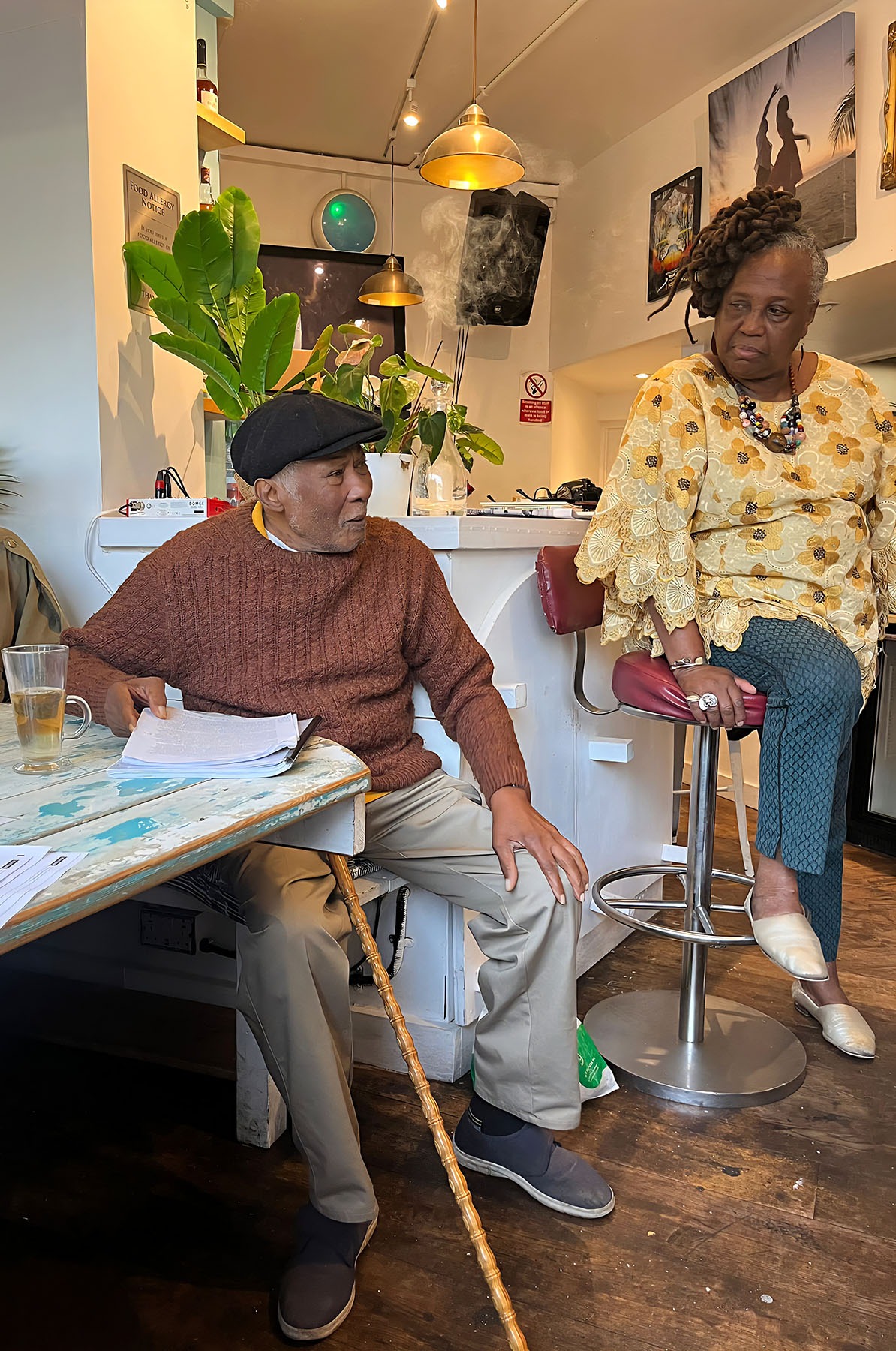
Premium Experiences offer in-depth explorations featuring conversations with community elders and descendants of historical figures, including special sessions with Jamila Bolton Gordon, daughter of Rhodan Gordon from the Mangrove Nine. These experiences also include a community talk about the real history of carnival—how it evolved, who built it, and why the true story matters.
Every walk prioritises dignity-centred storytelling that honours resistance and amplifies community voices. We don't just tell you about history—we connect you with the living legacy of Caribbean culture in London.
Moving Forward with Truth
With Notting Hill Carnival's 60th anniversary approaching in 2026, now's the perfect moment to tell the complete, accurate story. When you discuss Notting Hill's Caribbean heritage, remember to call Claudia Jones the Mother of Caribbean Carnival, credit Rhaune Laslett as Notting Hill Carnival's founder, acknowledge Leslie Palmer as the visionary who built Europe's biggest street festival, and recognise musicians like Russ Henderson who brought Caribbean sounds to the streets.
Getting history right doesn't diminish anyone—it deepens our understanding of how real change happens. Creating lasting cultural institutions requires multiple people, diverse approaches and years of persistent effort.
Claudia Jones was extraordinary. Notting Hill Carnival is extraordinary. But they're different stories, and both deserve telling with honesty, clarity and respect for the truth.
Ready to explore authentic Caribbean heritage in Notting Hill? Book your place on our next heritage walk, where rigorous research meets genuine community storytelling. Discover the real history of Notting Hill Carnival, Claudia Jones's actual legacy, and the remarkable stories of Black British resistance and celebration that shaped West London.


Contact
QUESTIONS? REACH OUT ANYTIME
hello@nottinghillwalks.co.uk
© 2026. All rights reserved.
Partners

Notting Hill Walks is part of More Curricular alongside Hidden Tudors Tours