Black Americans in Britain: The Abolitionist Who Lived in Notting Hill
Black Americans in Britain fought slavery. Sarah Parker Remond refused her seat a century before Rosa Parks — and she lived in Notting Hill. Read her story.
2/15/20264 min read
When Did Britain Abolish Slavery — And Why Did America Take So Long?
In 1807, Britain abolished the transatlantic trade in enslaved people. In 1833, the Slavery Abolition Act freed enslaved people across most of the British Empire, with full emancipation taking effect on 1 August 1834. It was far from perfect — enslavers were compensated with £20 million (the enslaved people received nothing), and the formerly enslaved in the Caribbean were forced into years of so-called "apprenticeship" that looked a lot like continued bondage. But legally, slavery in the British Empire was over.
Across the Atlantic, it was a very different story. Slavery remained legal in the United States for another three decades, not ending until the Thirteenth Amendment was ratified in December 1865, after a devastating civil war that killed over 600,000 people. And even after abolition, the violence did not stop — lynching, segregation, and systemic racism continued for generations.
That gap — between British abolition in the 1830s and American abolition in the 1860s — is what brought some of the most extraordinary African Americans of the nineteenth century to these shores.
African Americans Who Came to Britain to Fight Slavery
Most people have heard of Frederick Douglass, the formerly enslaved man who became the most famous African American orator of his age. He spent nineteen months touring Britain and Ireland in 1845–47, speaking to enormous crowds and drawing thousands to hear him at venues like Finsbury Chapel and Exeter Hall in London. British supporters even raised the money to purchase his legal freedom, so he could return home without fear of recapture.
But Douglass was far from alone. Over six decades, from the 1830s to the 1890s, a remarkable succession of African Americans made the journey to Britain. They came for safety — many were fugitives from slavery, and even in the so-called "free" states of America they were not safe, particularly after the Fugitive Slave Act of 1850 gave enslavers the legal right to pursue and reclaim people who had escaped to freedom. They came for education — denied schooling in America because of the colour of their skin. They came to publish — London became a major centre for the narratives of formerly enslaved people that told the world what slavery really looked like. And above all, they came because they understood something powerful: if America would not listen to Black voices at home, perhaps it would care what the British thought of them. International pressure was one of the most effective weapons they had.
Moses Roper arrived in Liverpool in 1835, the first formerly enslaved person to lecture in Britain. He learned to read and write here, published his narrative in London, and gave over 2,000 lectures across England, Ireland, Scotland and Wales. William Wells Brown, who had helped sixty-nine people escape slavery through the Underground Railroad, spent five years in Britain and published the first novel ever written by an African American — right here in London, in 1853. William and Ellen Craft, whose breath taking escape from slavery in Georgia is one of the great stories of the nineteenth century, lived in England for nineteen years, settling in Hammersmith where they raised five children and organised for emancipation from their family home. And Ida B. Wells came in the 1890s to campaign against lynching, showing British audiences photographs of the atrocities being committed in the American South.
Sarah Parker Remond: A Black American Abolitionist in Notting Hill
Of all these extraordinary individuals, one has a particularly special connection to Notting Hill.
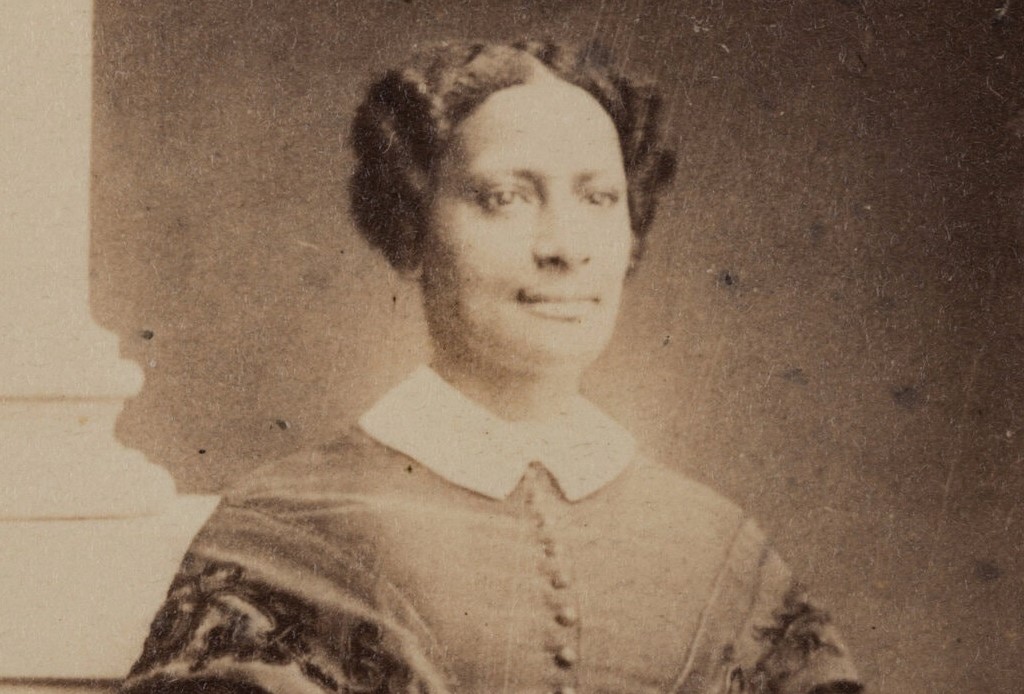
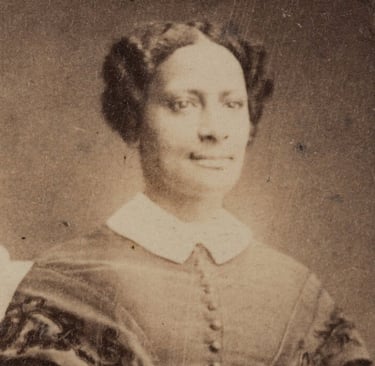
Sarah Parker Remond was born free in Salem, Massachusetts, in 1826, into a prosperous and activist Black family. Her brother, Charles Lenox Remond, was the first Black lecturer employed by the American Anti-Slavery Society. Sarah was a fighter from the start. A full century before Rosa Parks, she refused to move from her seat in a segregated Salem theatre. She was physically pushed down the stairs. She sued — and she won.
In January 1859, Sarah sailed from Boston on the steamer Arabia, arriving in Liverpool fifteen days later as an agent of the American Anti-Slavery Society. Her mission was to gather British support for the abolition of slavery. She lectured to packed audiences across England, Ireland and Scotland, and the newspapers praised her as one of the finest female speakers they had ever heard.
What made the lectures of Sarah particularly remarkable was her willingness to speak about a subject that Victorian society considered deeply taboo: the sexual exploitation of enslaved women. She told British audiences truths that others would not voice, and they listened.
Sarah did not just campaign. She studied. She enrolled at Bedford College for Women in London, learning languages and liberal arts. She joined the London Emancipation Committee and served on the executive committee of the Ladies' London Emancipation Society. She later trained as a nurse at University College London — which today honours her with the Sarah Parker Remond Centre for the Study of Racism and Racialisation.
And here is where Notting Hill enters the story. Sarah became close friends with the radical MP Peter Taylor and his wife Clementia, and she stayed at their home — Aubrey House, on Aubrey Road, right here in the heart of Notting Hill. Aubrey House, which still stands today, was a gathering place for progressive thinkers and reformers. For Sarah, it was a place where she could live, think and organise without the daily weight of racial prejudice that defined life in America.
In 1865, Sarah applied for and received British citizenship. The following year, she was among 1,500 women who signed the first women's suffrage petition in Britain — connecting the fight against slavery to the fight for women's rights. She then moved to Florence, Italy, where she qualified as an obstetrician and practised medicine for over twenty years. She never returned to America. She died in Rome in 1894.
Walk the History: Visit Aubrey House, Notting Hill
Next time you are walking through Notting Hill, take a moment to find Aubrey Road, near the top of Campden Hill. Aubrey House is there, behind its garden walls, just as it was when Sarah Parker Remond stayed within them — an African American woman who crossed an ocean to fight for freedom and found a home in our neighbourhood.
Her story, and the stories of all the African Americans who came to Britain to campaign against slavery, remind us that the fight for justice has always been international. It has always required people willing to travel, to speak, to put themselves in front of audiences and tell the truth. And some of those journeys led right here, to the streets we walk every day.
Happy US Black History Month — from Notting Hill, with history.
Notting Hill Walks is a Black heritage walk exploring the Caribbean and African American history of Notting Hill and the surrounding area. To join one of our guided walks and discover more hidden histories on your doorstep, visit nottinghillwalks.co.uk.
Contact
QUESTIONS? REACH OUT ANYTIME
hello@nottinghillwalks.co.uk
© 2026. All rights reserved.
Partners


Notting Hill Walks is part of More Curricular alongside Hidden Tudors Tours